


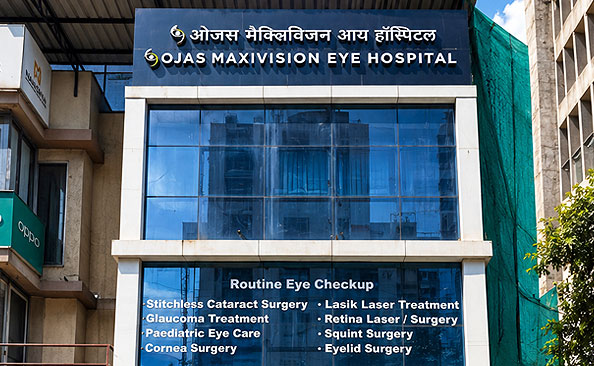
 Bandra
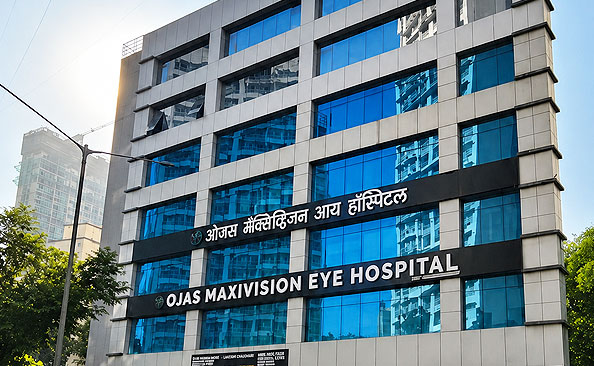 Kandivali
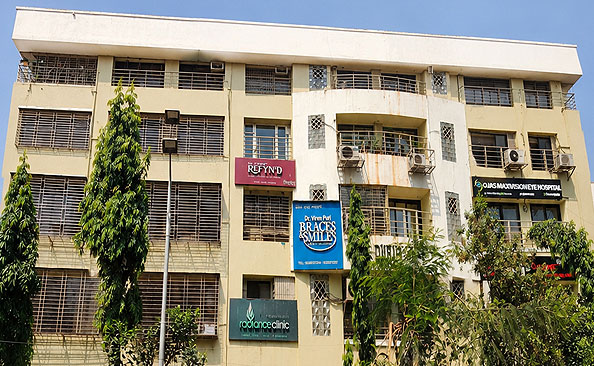 Juhu
Juhu

What Is PRELEX Eye Surgery?
PRELEX (Presbyopic Lens Exchange) is a vision correction surgery in which the natural lens of the eye is replaced with an artificial intraocular lens (IOL). With suitable lens selection, PRELEX can treat presbyopia and other refractive errors such as hyperopia, myopia and astigmatism.
This procedure is similar to modern cataract surgery. Cataract surgery is done when your natural lens has become cloudy, whereas PRELEX may be done when the natural lens is clear but has lost its ability to focus properly at different distances because of age-related changes.
This surgery allows your eyes to focus at multiple distances while reading, working on a computer, using a mobile phone or driving. You may experience a remarkable improvement in your daily activities without searching for glasses every time.
Why You Struggle with Near Vision After 40?
Eyes natural lens is flexible when you are young. It changes its shape to help you look on objects at different distances.
With age, usually from your 40s, the lens gradually starts stiffening. As a result, focusing on nearby objects becomes difficult. This normal age-related change is called presbyopia.
You may notice:
- Holding your phone or book farther away to read.
- Needing brighter light for reading.
- Difficulty in reading small print.
- Eye strain after prolonged eye work.
- Headaches after reading.
How Does PRELEX Eye Surgery Correct Vision?
In PRELEX eye surgery, the natural lens is removed and replaced with an artificial IOL specially selected for your unique eyes.
The new lens helps your eyes focus at more than one distance. Depending on the IOL chosen, it may provide clear vision for near, intermediate and far distances. Activities such as reading books, menus and mobile messages require near vision. Driving, watching television and seeing distant objects require good distance vision. Computer work generally requires intermediate vision. The choice of lens is important because different IOLs provide different ranges of vision. Your eye specialist will assess your eyes and daily requirements before recommending the lens option.
How Is PRELEX Different from Cataract Surgery?
The surgical procedure in both PRELEX and cataract surgery is similar as both involves removing the natural lens and replacing it with an artificial IOL. But the main difference is when and why the procedure is performed.
- Cataract surgery is performed when the natural lens becomes cloudy and affects vision. Once the natural lens has been replaced with an artificial lens, a cataract cannot develop in that treated eye.
- PRELEX is performed before cataract develops and to reduce dependency on glasses or contact lenses.
Are you A Good Candidate for PRELEX?
PRELEX may be considered for people who:
- Are 40 years and above.
- Are experiencing difficulty with near vision.
- Depend on reading glasses or bifocals for daily activities.
- Want to reduce their dependence on spectacles.
- Have stable vision.
- Do not have severe eye conditions.
- Are not suitable candidates for laser vision correction such as LASIK.
PRELEX may also be considered for adults who have other refractive errors like:
- Myopia
- Hyperopia
- Astigmatism
But a detailed examination by an eye specialist is necessary to determine whether you are a suitable candidate or not.
What Tests Are Done Before PRELEX Surgery?
A detailed pre-operative examination is an important part of PRELEX treatment. Your eye specialist may perform measurements such as:
- Corneal mapping.
- Lens power analysis.
- Detailed eye measurements.
- Retinal assessment.
These evaluations help the eye surgeon understand the condition of your eyes and select the lens that best matches your visual requirements and lifestyle.
What Are the Different Types of PRELEX Lenses?
Same type of IOL cannot be used for all the patients. Lens are selected according to your visual needs and daily lifestyle.
- Multifocal IOLs: They are designed to provide vision at two main distances – near and far. They may be used for people whose main requirement involves reading and distance activities.
- Trifocal IOLs: They are designed to provide vision at three distances – near, intermediate and far. They are more useful for computer-related activities.
- Extended Depth of Focus (EDOF) Lenses: They are designed to provide a continuous range of vision. They may be used for patients who want less halos or glare, particularly during night-time activities.
- Toric Multifocal Lenses: They are used to correct astigmatism along with presbyopia. This may be a good option for patients with corneal irregularities.
How Is PRELEX Eye Surgery Performed?
PRELEX is a minimally invasive procedure and generally takes around 15 to 20 minutes per eye. The procedure is performed under topical anaesthesia, so you remain awake during the procedure.
- Step 1: Pre-surgery consultation: Your ophthalmologist performs a detailed eye measurement and recommends the most suitable IOL for your eyes.
- Step 2: Numbing your eye Anaesthetic eye drops are used to numb your eyes. Most patients remain comfortable during the procedure and may feel only mild pressure.
- Step 3: Creating a small incision A very small opening is made at the edge of the cornea and this naturally heals within a day.
- Step 4: The natural lens is removed The natural lens is broken into smaller pieces using Femto Second Laser and then removed.
- Step 5: The new lens is implanted The selected IOL is placed in the same location where the natural lens was present. The lens is designed to provide clear vision across all distances.
- Step 6: Going home the same day PRELEX is generally performed as a day-care procedure. Most patients can leave the hospital within a few hours.
How Long Does PRELEX Surgery Take?
The actual procedure is generally short and may take around 15 to 20 minutes per eye. But the total time you spent at the hospital will be longer because you also need pre-operative preparation and post-operative observation. PRELEX is generally performed as a day-care procedure.
What Recovery Time You Expect After PRELEX Surgery?
Most patients experience a relatively quick recovery.
- First 1 - 2 days: You may notice mild blurred vision and sensitivity to light. And these symptoms settle quickly.
- First week: Vision continues to improve. Your doctor may prescribe eye drops to support healing and prevent infection.
- First month: Your brain gradually adapts to the new lens. Your vision at different distances may become increasingly clear and natural.
- Follow-up: Regular follow-up appointments are important. Your ophthalmologist will monitor the healing process and visual results.
Many patients can return to work and light daily activities within 2 to 3 days, but individual recovery may vary.
What makes PRELEX Eye Surgery different?
- Helps correct presbyopia and reduce dependence on reading glasses
- Provides vision at multiple distances with a suitable premium IOL
- Can also correct myopia, hyperopia and astigmatism in selected patients
- Short procedure that usually takes around 15 to 20 minutes per eye
- Performed under topical anaesthesia for a comfortable experience
- One-day procedure and patients usually returning home within a few hours
- Quick visual recovery, your vision often improvs within 1 to 2 days
- Long-term vision correction by replacing the natural lens with an artificial IOL
What Are the Benefits of PRELEX Eye Surgery?
PRELEX can offer several benefits:
- Reduces dependence on reading glasses.
- Can provide good vision at near, intermediate and far distances.
- Can correct presbyopia, myopia, hyperopia and astigmatism.
- Provides a long-term lens-based vision correction option.
- Prevents the development of a cataract in the treated natural lens.
- Can be considered for people who are not suitable candidates for LASIK.
- Can make reading and smartphone use more convenient.
- Can help to work over computer.
- May help provide clearer distance vision for activities such as driving.
- Usually allows patients to return to light daily activities within a few days.
Is PRELEX Eye Surgery Painful?
PRELEX eye surgery is performed using topical anaesthesia in the form of numbing eye drops. Because of this most patients remain comfortable during the procedure. You may experience mild pressure, but generally significant pain is not reported during surgery. Your eye surgeon will priorly explain what you may experience during and immediately after the procedure before he starts the surgery.
Can PRELEX Eliminate the Need for Glasses?
The main purpose of PRELEX is to reduce dependence on spectacles. With suitable premium IOLs, many patients can easily perform some common activities like reading a book, checking a mobile phone, using a computer, seeing distant objects or driving. However, individual results may vary. Your ophthalmologist will discuss with you the expected visual results and the possibility if glasses are required in certain circumstances.
Is PRELEX Eye Surgery a Permanent Treatment?
The artificial lens implanted during PRELEX is designed to remain in the eye for a lifetime and does not normally need replacement. Because the natural lens has been replaced, so cataract cannot develop in that treated eye. PRELEX therefore provides a long-term solution for presbyopia and other refractive errors.
What Are the Possible Side Effects of PRELEX?
PRELEX is considered safe, but like any surgical procedure it can have side effects.
Possible side effects and complications include:
- Blurred vision.
- Mild glare.
- Halos around lights at night.
- Dry eyes.
These effects gradually improve as your eyes heal and your brain adjusts to the new lens.
PRELEX Eye Surgery at Ojas Maxivision Eye Hospital in Mumbai
If you are above 40 years of age and dependent on reading glasses, PRELEX may be one of the vision correction options you can discuss with your ophthalmologist. At Ojas Maxivision Eye Hospital in Mumbai, a detailed eye examination can help determine whether PRELEX is appropriate for your eyes or not.
Book Your Appointment for PRELEX Eye Surgery in Mumbai at Ojas Maxivision Eye Hospital
If you are tired of your reading glasses and thinking of PRELEX eye surgery in Mumbai, speak with an experienced ophthalmologist at Ojas Maxivision Eye Hospital. A thorough eye examination and expert guidance at an eye hospital in Mumbai can help you understand whether PRELEX is the right choice for your vision and lifestyle.
Frequently Asked Questions About PRELEX Eye Surgery
Yes, PRELEX can be performed on both eyes. Usually, there is a gap of a few days to a couple of weeks between the two procedures. This allows the first eye to heal before the second eye is treated.
Yes, depending on the type of IOL selected, PRELEX can correct both near, intermediate and distance.
Some patients after PRELEX may notice halos or glare around lights at night. These effects usually improve as the eyes heal and the brain adjusts to the new lens.
No, age alone doesn’t determine your suitability for PRELEX eye surgery. Your cornea, retina, macula, optic nerve, eye pressure, natural lens and overall eye health need to be checked.
Most of the patients can use their phone or computer within a day or two after surgery. Your eye surgeon will advise you to take regular breaks from screens during the first week and based on your recovery he will also suggest you when can you start using the screen freely.
Yes, contact lens users can also go for PRELEX eye surgery. Your doctor may ask you to stop wearing contact lenses for a few days before your eye measurements so that the results are accurate.
The cost of PRELEX eye surgery in Mumbai varies from patient to patient. It may depend on the type of IOL selected, pre-operative investigations, surgical requirements and whether one or both eyes are treated. The most accurate estimate can be provided after an eye examination and discussion with the eye surgeon. Patients should contact Ojas Maxivision Eye Hospital directly for the current treatment cost and details.
Cashless treatment depends on the insurance provider, policy terms, hospital empanelment and medical indication. Ojas Maxivision Eye Hospital is associated with various government and corporate panels, including CGHS, RBI, NABARD and BSNL. Patients should confirm PRELEX-specific coverage and cashless eligibility with the hospital and their insurer before scheduling surgery.
Ojas Maxivision Eye Hospital currently lists centres in Bandra (West), Kandivali (East) and Juhu. You can consult an eye specialist at Ojas Maxivision Eye Hospital in Mumbai for PRELEX eye surgery eligibility. The eye hospital in Mumbai provides specialist eye-care services and patients can contact the hospital to confirm the appropriate centre and appointment availability.