


 Bandra
 Kandivali
 Juhu
Juhu
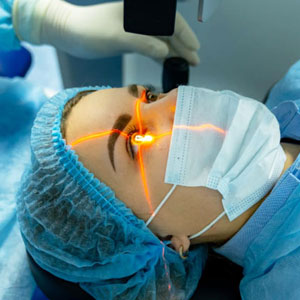
What Is Epi Contoura Surgery?
Epi Contoura is an advanced topography-guided laser eye surgery designed to correct refractive errors like myopia and astigmatism with high precision. The treatment is precise, minimally invasive and usually performed as a day-care procedure.
Unlike traditional LASIK, this flap-free procedure uses detailed corneal mapping technology to identify and treat tiny irregularities on the corneal surface for highly personalized vision correction. By reshaping the cornea more accurately, Epi Contoura may help provide sharper, clearer and more natural vision while reducing glare, halos and dependence on glasses or contact lenses.
Why Is Epi Contoura Considered an Advanced Vision Correction Procedure?
Epi Contoura is considered one of the more personalized forms of laser vision correction because it is based on the unique topography of the patient’s cornea. Every eye has microscopic irregularities that may affect visual quality, even while wearing glasses.
Traditional laser treatments mainly focus on correcting the spectacle number, while Epi Contoura additionally addresses corneal surface imperfections.
Why Is Epi Contoura Surgery Performed?
Epi Contoura surgery is performed to improve visual clarity and reduce dependence on glasses or contact lenses. It may be recommended for people who want more personalized laser vision correction based on their corneal surface characteristics.
People may consider Epi Contoura if they:
- Frequently wear glasses or contact lenses
- Experience glare or halos during night driving
- Have difficulty with visual sharpness despite glasses
- Want long-term refractive error correction
- Have stable eye power
- Are suitable candidates for laser eye surgery
The treatment plan is customized according to corneal shape, refractive error and overall eye health.

Who Can Benefit from Epi Contoura Surgery?
Epi Contoura may be suitable for adults with stable eye power and healthy eyes. It is especially beneficial for people looking for highly customized laser vision correction.
People considering Epi Contoura surgery usually need to meet certain criteria, including:
- Age requirement: Candidates are generally advised to be at least 18 years old with stable vision for at least one year before treatment.
- Stable eye power: Glasses or contact lens power should remain stable for 6 to 12 months before planning surgery.
- Suitable for thin or borderline corneas: Since Epi Contoura is a flap-free procedure, it may be an option for some patients who are not ideal candidates for conventional LASIK due to thinner corneas.
- Refractive errors suitable for treatment:Epi Contoura may help correct mild to moderate myopia (nearsightedness), hyperopia (farsightedness) and astigmatism within treatable limits.
- Suitable for active lifestyles:Epi Contoura is often considered by individuals involved in sports, fitness activities, or physically active professions where eye safety is important.
- Reduced flap-related concerns: The procedure may be preferred by people who want to avoid flap-related complications associated with traditional LASIK surgery.
- Improved visual quality: Many patients choose Epi Contoura for its highly customized treatment approach that may help improve night vision quality and reduce glare or halos.
A detailed eye examination helps determine whether Epi Contoura is the right treatment option for you.
Who May Not Be Suitable for Epi Contoura Surgery?
Epi Contoura may not be suitable for everyone. Certain eye conditions or medical problems may affect treatment safety and results.
People who may not be suitable for Epi Contoura surgery include:
- Patients with progressive corneal conditions: Eye conditions such as keratoconus or worsening corneal irregularities may make the treatment unsafe.
- Individuals with unstable vision: The procedure is usually not recommended for people whose glasses or contact lens power continues to change.
- Patients with ocular surface disorders: Certain eye surface problems or inflammation may reduce the safety and effectiveness of the procedure.
- Individuals with very high refractive errors: Extremely high eye power may not always be suitable for Epi Contoura treatment.
- People with severe dry eyes: Advanced dry eye disease may affect healing and visual recovery after surgery.
- People with uncontrolled medical conditions: Autoimmune diseases or uncontrolled systemic health conditions may interfere with proper healing after surgery.
A complete refractive and corneal evaluation is necessary before planning surgery.
How Is Epi Contoura Treatment Performed?
Epi Contoura surgery is usually completed within a short time and is performed using advanced laser technology.
Preparation before surgery
Comprehensive eye evaluation
A detailed eye check-up is performed, including corneal mapping, corneal thickness testing, eye power assessment and retinal examination.
Suitability assessment
The eye specialist evaluates whether the patient is a suitable candidate for Epi Contoura based on overall eye health and corneal condition.
Pre-surgery instructions
Patients are usually advised to stop wearing contact lenses a few days before surgery and avoid eye makeup, creams or lotions on the day of the procedure.
Epi Contoura surgical procedure
Numbing eye drops
Anesthetic eye drops are used to keep the procedure comfortable and painless without injections or general anesthesia.
Advanced corneal mapping
A detailed topography scan creates a customized map of the cornea by identifying even small surface irregularities.
Gentle epithelium removal
The thin outer layer of the cornea is carefully lifted without creating a corneal flap.
Customized laser correction
The excimer laser reshapes the cornea according to the personalized treatment plan to correct refractive errors and improve visual quality.
Protective contact lens placement
A soft bandage contact lens is placed over the eye to support healing while the corneal surface naturally recovers over the next few days.
What Are the Benefits of Epi Contoura Treatment?
Epi Contoura offers several advantages because of its highly customized approach to laser vision correction.
Benefits of Epi Contoura:
- Flap-free procedure: Since no corneal flap is created, the risk of flap-related complications such as displacement or folds is reduced.
- Highly customized treatment: Advanced topography-guided technology helps correct both refractive errors and tiny corneal irregularities for sharper and clearer vision.
- Suitable for thinner corneas:Epi Contoura may be a safer option for some patients with thin or borderline corneal thickness.
- Helps preserve corneal strength: The flapless approach helps maintain the natural strength and stability of the cornea.
- Quick recovery and stable results: Many patients notice gradual vision improvement within a few days, with long-lasting visual results.
- Less dryness after surgery: Because fewer corneal nerves are affected, many patients may experience less eye dryness after the procedure compared to traditional LASIK.
- Improved visual quality: The procedure may help reduce glare, halos, and night vision disturbances while improving overall visual clarity.

What Are the Risks and Side Effects of Epi Contoura Treatment?
Although Epi Contoura surgery is considered safe and advanced, like all surgical procedures, it may involve some temporary side effects and minor risks, including:
- Temporary discomfort: Mild irritation, watering, burning sensation or light sensitivity may occur for a day or two after surgery.
- Temporary corneal haze: Some patients may develop mild corneal haze during healing, which usually improves with prescribed medications.
- Delayed healing time of the corneal surface: The outer layer of the cornea takes a few days to heal naturally and recovery may vary from person to person.
- Residual refractive error: In rare cases, a small amount of eye power may remain after treatment and may sometimes require further correction.
- Temporary dryness or glare: Some patients may experience dry eyes, glare or halos initially, which generally improve with eye drops and healing.
- Fluctuating vision during recovery: Vision may appear slightly unstable or fluctuate during the first few weeks as the eyes heal and stabilize.
Serious complications are uncommon when the treatment is performed after proper evaluation by experienced eye specialists.
What Is the Post-Surgical Care and Recovery Process After Epi Contoura Surgery?
Recovery after Epi Contoura surgery is usually smooth, with gradual improvement in vision over the following days and weeks. Proper aftercare plays an important role in comfortable healing and better visual results.
- Initial recovery: Patients usually rest for a short time after the procedure before going home. Mild watering, irritation, or light sensitivity may occur temporarily during the first few hours.
- Medications and eye drops: Prescribed antibiotic, lubricating and anti-inflammatory eye drops help support healing, reduce discomfort and prevent infection.
- Recovery precautions: Avoid rubbing the eyes, swimming, eye makeup, dust, smoke and excessive water exposure during the early healing period. Wearing sunglasses outdoors may help protect the eyes and improve comfort.
- Vision improvement: Many patients notice clearer vision within 2 to 3 days, while vision quality continues to stabilize gradually over the next few weeks.
- Follow-up appointments: Regular follow-up visits are scheduled to monitor corneal healing and assess vision improvement after surgery.
Complete visual stabilization may take a few weeks depending on the individual healing response.
Is Epi Contoura Better Than Contoura Vision?
Both Epi Contoura and Contoura Vision are advanced topography-guided laser vision correction procedures designed to treat refractive errors like myopia and astigmatism. However, there are some important differences between the two treatments.
Procedure technique
- Epi Contoura: Flap-free Epi-LASIK procedure
- Contoura Vision: Flap-based LASIK procedure
Corneal suitability
- Epi Contoura: May be suitable for thin or mildly irregular corneas
- Contoura Vision: Usually preferred for patients with healthy and normal corneal thickness
Treatment approach
- Epi Contoura: Involves gentle removal or separation of the epithelium without creating a corneal flap
- Contoura Vision: Involves creating a corneal flap before laser correction
Dry eye risk
- Epi Contoura: Lower risk of post-surgery dryness because no flap is created
- Contoura Vision: Slightly higher risk of dry eyes due to flap creation
Recovery time
- Epi Contoura: Initial healing may take a little longer
- Contoura Vision: Faster visual recovery with less early discomfort
Suitability for active lifestyles
- Epi Contoura: Often preferred for individuals involved in sports or physically active professions
- Contoura Vision: Patients may need to avoid high-impact activities during early recovery
Safety and corneal strength
- Epi Contoura: Helps preserve natural corneal strength because it is flap-free
- Contoura Vision: Safe and effective, but involves flap-related considerations
What Are the Alternatives to Epi Contoura Treatment?
Alternative vision correction procedures may include:
- LASIK
- Femto LASIK
- SILK eye surgery
- SMILE eye surgery
- PRK
- ICL surgery
The most suitable procedure depends on the patient’s eye condition, corneal thickness and visual needs.
Book Your Appointment for Epi Contoura Surgery in Mumbai at Ojas Maxivision Eye Hospital
If you are planning to reduce dependence on glasses or contact lenses, an early consultation can help determine whether you are suitable for advanced laser vision correction. At Ojas Maxivision Eye Hospital, our experienced eye specialists provide detailed eye evaluation and personalized treatment planning for patients considering Epi Contoura.
If you are searching for an advanced eye hospital in Mumbai for customized laser vision correction, our team offers patient-focused care for Epi Contoura in Mumbai. Clear vision begins with the right guidance and the right care.
Frequently Asked Questions About Epi Contoura Surgery
Yes, Epi Contoura is an advanced laser eye surgery used to correct vision problems like myopia and astigmatism. The procedure uses detailed corneal mapping and excimer laser technology to create a highly personalized treatment plan for sharper, clearer and more natural vision correction.
No, Epi Contoura surgery is usually painless because numbing eye drops are used before the procedure. Some patients may experience mild irritation, watering, burning sensation or light sensitivity for a short time after surgery, but these symptoms generally improve during the healing process.
Many patients notice improvement in vision within a few days after Epi Contoura surgery. Vision usually continues to become clearer over the following weeks as the cornea heals completely.
Epi Contoura may significantly reduce dependence on glasses or contact lenses for many people. However, some patients may still need glasses for certain activities or may develop age-related vision changes later in life, such as reading glasses after the age of 40.
Epi Contoura is a flap-free and topography-guided laser vision correction procedure that treats both eye power and tiny corneal irregularities. Traditional LASIK mainly corrects refractive errors by creating a corneal flap, while Epi Contoura offers a more customized and precision-based treatment approach.
The cost of Epi Contoura treatment may vary depending on the technology used, refractive error, diagnostic evaluation and personalized treatment planning. A consultation and detailed eye assessment at our hospital can help provide a more accurate estimate.
Ojas Maxivision Eye Hospital provides cashless treatment facilities for selected eye procedures through approved insurance companies and empanelled organizations. Patients are advised to check eligibility, approvals and coverage details before treatment planning. The hospital is also empanelled with CGHS, RBI, NABARD and BSNL for eligible eye care services in Mumbai.
Ojas Maxivision Eye Hospital has centres across Mumbai, Maharashtra, including Bandra (West), Kandivali (East) and Juhu, providing advanced eye care and laser vision correction services.