


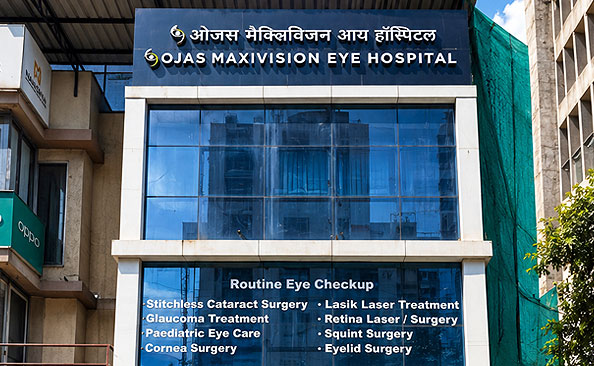
 Bandra
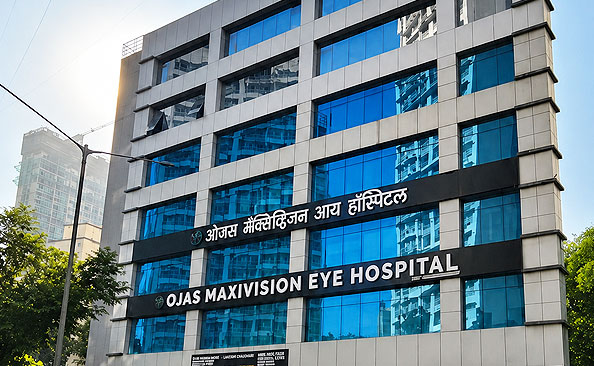 Kandivali
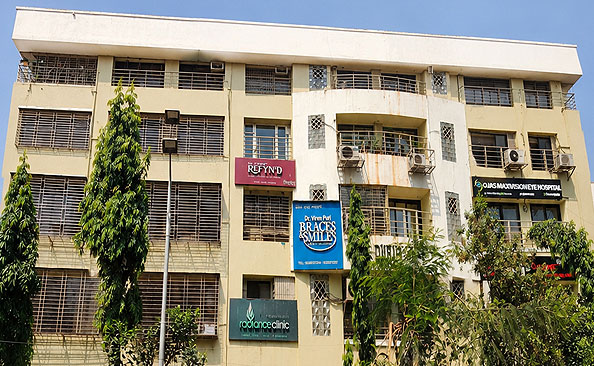 Juhu
Juhu
What Is Myopia (Nearsightedness)?
Myopia, also called nearsightedness, is a common eye condition in which nearby objects appear clear, but distant objects look blurry. It happens when the eye grows slightly longer than normal or when the cornea is too curved. Because of this, light entering the eye focuses in front of the retina instead of directly on it.
Myopia can affect children, teenagers and adults. It often begins during school years and may gradually worsen with age, especially during growing years. Increased screen use, mobile devices and less outdoor activity have contributed to the rising number of myopia cases worldwide.
In mild cases, glasses or contact lenses can correct vision effectively. However, higher levels of myopia may increase the risk of serious eye conditions later in life, including retinal detachment, glaucoma and macular degeneration. Early diagnosis and regular eye check-ups are important to protect long-term eye health.
At Ojas Maxivision Eye Hospital in Mumbai, our experienced eye specialists provide detailed evaluation and personalized myopia treatment options for children and adults.
What Are the Myopia Symptoms You Should Not Ignore?
Myopia symptoms usually develop slowly over time and may go unnoticed in the early stages. Children may not realize that their vision is becoming blurry or weaker. Parents should carefully watch for early warning signs, as ignoring these symptoms can lead to worsening myopia and may increase the risk of future eye complications.
Common symptoms of myopia include:
- Blurred distance vision: Difficulty seeing faraway objects clearly, such as road signs, TV screens or classroom boards.
- Frequent squinting: Narrowing the eyes to see distant objects more clearly for a short time.
- Headaches and eye strain: Tired or aching eyes caused by continuous effort to focus.
- Difficulty seeing at night: Blurry vision or poor visibility in dim light, especially while driving.
Common symptoms of myopia in children include:
- Sitting very close to the TV.
- Holding mobile phones or books too near the face.
- Frequent eye rubbing.
- Excessive blinking.
- Difficulty noticing distant objects clearly.
Children with untreated myopia may lose interest in studies, sports or outdoor activities because they cannot see distant objects properly.
When Should You See an Eye Specialist for Myopia (Nearsightedness)?
Timely eye examinations are important because myopia can worsen if ignored. Children should also have routine eye check-ups from an early age, as timely diagnosis and treatment can help prevent myopia from worsening in the future.
Visit an eye specialist if you notice:
- Blurred vision while looking at distant objects.
- Frequent headaches or eye strain.
- Difficulty driving at night.
- Squinting regularly.
- Your child sitting too close to screens.
- Falling school performance due to visibility issues.
- Rapid changes in glass number.
Seek immediate medical attention if myopia is associated with:
- Sudden flashes of light.
- Floaters
- Sudden vision loss.
- Curtain-like shadow in vision.
If one or both parents have myopia, children may have a higher chance of developing it. Regular eye check-ups can help detect vision changes early and allow timely treatment to slow the progression of myopia and protect long-term eye health.
Important Things to Know About Myopia (Nearsightedness)
- Myopia commonly starts during childhood and may continue to increase during teenage years.
- Spending more time outdoors and taking breaks from screens may help reduce the risk of worsening myopia.
- Although myopia cannot be naturally reversed, it can be effectively managed with glasses, contact lenses and advanced treatments like orthokeratology or low-dose atropine eye drops.
What Causes Myopia?
Myopia develops due to changes in the shape and growth of the eye, especially during childhood. It happens when the eyeball becomes longer than normal or the cornea becomes too curved, causing light to focus in front of the retina instead of directly on it.
Common causes include:
- Family history: Children with one or both parents having myopia are more likely to develop it.
- Excessive near work: Spending long hours reading, writing or doing close-up work may increase the risk.
- Increased screen time: Frequent use of mobile phones, tablets, computers and other digital devices can contribute to myopia progression.
- Less outdoor activity: Spending less time outdoors, especially in natural daylight, may increase the chances of developing myopia.
- Changes in eye shape: The eye may grow too long from front to back, affecting the way light focuses inside the eye.
- Long study hours: Intense academic work and continuous close-up focus may increase the chances of myopia progression.
- Poor lighting conditions: Reading or using screens in dim light can put extra strain on the eyes and may increase the risk of developing or worsening myopia.
- Urban lifestyle: Myopia is more common in people living in cities due to indoor lifestyles and increased screen exposure.
Myopia usually develops during childhood and may progress until early adulthood.
What Are the Risk Factors for Myopia (Nearsightedness)?
Several factors can increase the risk of developing myopia (nearsightedness). These include family history, lifestyle habits and environmental factors. Children who spend less time outdoors and more time doing close-up activities may have a higher chance of developing myopia.
Common risk factors include:
- Family history of myopia.
- Excessive screen exposure.
- Prolonged reading or close work.
- Lack of outdoor activities.
- Poor visual habits.
- Early onset in childhood.
- Urban lifestyle.
- Inadequate lighting during reading.
Helpful habits to reduce the risk:
- Spend more time outdoors daily.
- Take regular breaks during screen use or reading.
- Maintain proper reading distance and posture.
- Get regular eye check-ups for early detection and monitoring.
Did you know?
- Myopia is becoming increasingly common worldwide, especially among children.
- Spending more outdoor time may help slow myopia progression in children.
- High myopia can increase the risk of retinal diseases.
- Myopia usually starts between 6 and 14 years of age.
- Regular eye examinations are important even if symptoms seem mild.
- Myopia can progress rapidly during teenage years.
- Early treatment may help control worsening vision.
What Are the Different Types of Myopia (Nearsightedness)?
Myopia (nearsightedness) can be classified based on its severity, progression and the structural changes in the eye. It occurs when light entering the eye focuses in front of the retina, usually because the eyeball is longer than normal or the cornea is too curved.
Common types of myopia include:
Simple myopia
This is the most common type of myopia. It usually develops during school age and may stabilize in early adulthood. Most cases are mild to moderate and can be corrected with glasses or contact lenses.
High myopia
High myopia is a more severe form in which the eye power is very high. It may increase the risk of serious eye conditions such as retinal detachment, glaucoma and myopic macular degeneration.
Pathological myopia
This is a rare but serious type of myopia where the eyeball continues to elongate over time. It can cause damage to the retina and other eye structures, leading to severe vision problems.
Stationary myopia
This type remains stable after a certain age and does not worsen significantly.
Progressive myopia
In this type, the eye power continues to increase over time, especially during childhood and teenage years.
Axial myopia
This is the most common type and occurs when the eyeball becomes longer than normal.
Refractive myopia
This happens when the cornea or lens has too much focusing power due to increased curvature or thickness.
Night myopia
Some people experience blurry distance vision mainly in dim light or at night, especially while driving.
Congenital myopia
This type is present from birth and may require early diagnosis and treatment to support proper visual development.
Pseudomyopia
This is temporary blurred distance vision caused by eye strain or excessive close-up work. It happens due to spasm of the eye focusing muscles and may improve with proper rest and treatment.
Early diagnosis and regular eye check-ups are important to monitor myopia progression and protect long-term eye health.
How Is Myopia Diagnosed?
Myopia (nearsightedness) is diagnosed through a detailed eye examination performed by an eye specialist. The doctor checks how clearly you can see distant objects and measures the eye power needed to correct your vision.
Common diagnostic tests include:
- Medical history: The eye specialist will ask about your overall health, past eye problems and any medicines you are currently taking.
- Visual acuity test: This test checks how clearly you can see by asking you to read letters or symbols on an eye chart from a distance.
- Refraction test: Different lenses are placed in front of your eyes using a special device to determine the exact glasses or contact lens power needed for clear vision.
- Pupil examination: A bright light is shined into the eyes to see how the pupils react. Unusual pupil response may indicate an underlying eye problem.
- Retinoscopy: The doctor shines a light into the eye to study how light reflects from the retina. This helps measure the refractive error more accurately.
- Autorefractor test: An automated machine estimates your eye power and helps the doctor prepare the correct prescription.
- Slit-lamp examination: A special microscope is used to examine the front part of the eye, including the cornea, lens and iris.
- Retina and optic nerve examination: The doctor checks the retina and optic nerve to look for any changes or complications related to myopia.
- Cycloplegic refraction: In children, special eye drops may be used to relax the eye muscles and obtain a more accurate eye power measurement.
- Peripheral vision test: This test checks your side vision. Loss of peripheral vision can sometimes be a sign of glaucoma or other eye conditions.
- Eye pressure test: A gentle puff of air may be used to measure eye pressure. Increased eye pressure can be an early sign of glaucoma.
- Eye movement test: The doctor examines how well your eye muscles work and checks if both eyes move properly together.
Regular eye exams help monitor the disease progression and prevent complications.
When Should You Get Your Eyes Checked?
Regular eye check-ups are important for maintaining clear vision and detecting eye problems early at every stage of life.
For children:
Regular eye examinations should begin early in childhood. Eye check-ups before starting school can help detect myopia early and support better visual development.
For adults:
Adults should also undergo regular eye check-ups to monitor changes in vision caused by age, screen use, eye strain or medical conditions like diabetes.
Timely eye examinations can help protect your vision, ensure accurate treatment and support long-term eye health for both children and adults.
What Are the Complications of Myopia (Nearsightedness)?
In most people, myopia (nearsightedness) can be easily managed with glasses, contact lenses or vision correction procedures like LASIK. However, severe or pathological myopia may increase the risk of serious eye problems, such as: Common Complications of High Myopia
- Myopic Macular Degeneration (MMD): This is one of the most serious complications of high myopia. The central part of the retina (macula) becomes weak and damaged, which can lead to permanent loss of central vision.
- Retinal tears and retinal detachment: In high myopia, the retina becomes thinner and more fragile. This increases the risk of retinal tears or detachment, which can cause sudden vision loss if not treated immediately.
- Glaucoma: People with high myopia have a greater chance of developing glaucoma, a condition that damages the optic nerve and may gradually affect vision.
- Cataracts: Myopic patients may develop cataracts earlier than normal, causing cloudy or blurred vision.
- Choroidal Neovascularization (CNV): Abnormal blood vessels may grow under the retina in highly myopic eyes. These blood vessels can leak or bleed and affect central vision.
Regular eye check-ups and retinal examinations are important for people with high myopia to detect complications early and protect long-term vision.
Which Lenses Are Used to Correct Myopia (Nearsightedness)?
Corrective lenses are one of the most common ways to manage myopia (nearsightedness). They help improve vision and make daily activities clearer and more comfortable.
Eyeglasses
- Single vision lenses: Help people see distant objects clearly.
- Bifocal or progressive lenses: Suitable for people who have both myopia and age-related near vision problems (presbyopia).
Contact Lenses
- Rigid Gas Permeable (RGP) lenses: Offer sharper vision but may take some time to adjust to.
- Soft contact lenses: Comfortable for daily use and provide clear vision.
- Orthokeratology (Ortho-K) lenses: Special lenses worn overnight to gently reshape the cornea and improve daytime vision.
The best myopia correction option depends on a person’s lifestyle, comfort level and vision needs.
What Are the Available Myopia Treatment Options?
There are different ways to treat myopia and improve clear vision. Treatment options include non-surgical methods like glasses and contact lenses, as well as surgical procedures for more permanent vision correction.
Non-Surgical Treatments for Myopia
- Eyeglasses and contact lenses: Prescription glasses and contact lenses are common and effective non-surgical options for correcting myopia. They help focus light properly on the retina, improving clear distance vision.
- Orthokeratology (Ortho-K): Ortho-K uses specially designed contact lenses worn overnight to gently reshape the cornea temporarily. After removing the lenses in the morning, many people can enjoy clear vision during the day without glasses or contact lenses.
- Multifocal lenses: Multifocal glasses or contact lenses are designed to correct myopia while also helping manage other focusing problems. In some children, these lenses may also help slow the progression of myopia.
- Low-dose atropine eye drops: These prescription eye drops are commonly used in children to help slow myopia progression.
- They work by relaxing the eye’s focusing system.
- Studies show they may help reduce the rate at which myopia worsens over time.
- Vision therapy: Certain eye exercises and visual training programs may help improve eye coordination, focusing ability and visual comfort in selected cases of myopia. Your eye specialist can advise whether vision therapy may be beneficial.
Common exercises include:
- Blinking exercises to reduce dryness from screen use.
- Shifting focus between near and far objects.
- Palming exercises to relax eye muscles.
- Healthy eye habits and lifestyle changes: Simple daily habits can also support eye health and help manage myopia.
- More outdoor time: Spending at least 2 hours outdoors daily may lower the risk of developing myopia and help slow its progression in children.
- 20-20-20 rule: Every 20 minutes, look at something 20 feet away for at least 20 seconds to reduce eye strain during reading or screen use.
It is important to consult an eye specialist to choose the most suitable treatment plan based on age, eye condition and lifestyle needs.
Surgical Treatments for Myopia Correction
For people looking for long-term vision correction, several surgical procedures are available. These treatments reshape the cornea or use implanted lenses to improve vision.
- LASIK (Laser-Assisted in Situ Keratomileusis)
LASIK is one of the most popular laser eye surgeries for myopia. It reshapes the cornea so light focuses correctly on the retina.
Benefits:
- Quick recovery
- Minimal discomfort
- Effective for moderate myopia
Limitations:
- Not suitable for very thin corneas or very high myopia
- SMILE (Small Incision Lenticule Extraction)
SMILE is a minimally invasive laser procedure where a small piece of corneal tissue is removed through a tiny incision to correct myopia.
Benefits:
- Faster healing
- Less dry eye compared to LASIK
Limitations:
- May not suit very high myopia
- PRK (Photorefractive Keratectomy)
PRK is another laser vision correction procedure, often recommended for people with thin corneas. The outer layer of the cornea is removed before laser reshaping.
Benefits:
- Good option for patients unsuitable for LASIK
Limitations:
- Recovery takes longer than LASIK
- Implantable Collamer Lenses (ICL)
ICL surgery places a special lens inside the eye to correct high myopia without removing corneal tissue.
Benefits:
- Reversible procedure
- Suitable for severe myopia
Limitations:
- Slightly higher risk compared to laser procedures
- Refractive Lens Exchange (RLE)
In this procedure, the eye’s natural lens is replaced with an artificial intraocular lens (IOL), similar to cataract surgery.
Benefits:
- Helpful for older adults with high myopia
Limitations:
- Usually not recommended for younger patients
Key points to know:
- Myopia can worsen during growing years.
- Outdoor activity may help slow progression in children.
- Regular eye check-ups are important for monitoring.
- Advanced treatments can reduce dependence on glasses.
- High myopia needs lifelong retinal monitoring.
When Should I Consider Myopia Treatment?
Treatment should be considered when blurry vision affects daily life, school, work or driving.
Signs include:
- Difficulty seeing distant objects
- Frequent headaches
- Eye strain during studies
- Constant increase in glass power
- Poor night vision
Early treatment can improve visual comfort and help prevent complications.
What Questions Should You Ask Your Eye Specialist?
You can ask your doctor these simple questions:
- What type of myopia do I have?
- Is my myopia progressing?
- What treatment is suitable for me?
- Am I eligible for laser vision correction?
- What are the risks involved?
- How often should I get eye check-ups?
- Can my child benefit from myopia control treatment?
- Will I still need glasses after treatment?
Can I Prevent Myopia (Nearsightedness)?
Myopia cannot always be completely prevented, but certain habits may help reduce the risk and slow progression. These simple steps may help reduce the risk of worsening nearsightedness, especially in children.
- Spend more time outdoors: Children and teenagers should spend more time outdoors in natural sunlight. Regular outdoor activities have been linked to a lower risk of developing and worsening myopia.
- Follow the 20-20-20 rule: During reading or screen use, take regular eye breaks. Every 20 minutes, look at something 20 feet away for at least 20 seconds to reduce eye strain.
- Limit screen time: Reducing unnecessary screen time, especially in children, may help lower eye strain and reduce the risk of myopia progression linked to prolonged near work.
- Use proper lighting: Always read, study or work in a well-lit room. Good lighting helps reduce stress on the eyes during close-up activities.
- Maintain a healthy diet: A balanced diet rich in vitamins and nutrients that support eye health may help maintain healthy vision. Foods rich in vitamins A, C, E and omega-3 fatty acids are beneficial for the eyes.
- Get regular eye check-ups: Routine eye examinations are important for early detection and timely management of myopia. Regular check-ups help monitor vision changes and ensure the correct treatment when needed.
Following these healthy habits can help support long-term eye health and may slow the progression of myopia over time.
Book Your Myopia Consultation at Ojas Maxivision Eye Hospital
If you are searching for a trusted eye hospital in Mumbai for advanced vision care, Ojas Maxivision Eye Hospital offers expert diagnosis and personalized solutions for patients of all age groups. Our experienced eye specialists provide advanced options for myopia treatment in Mumbai, including glasses, contact lenses, myopia control therapies and modern refractive procedures.
Do not ignore blurry distant vision. Early care can protect your eyesight for years to come. Clear vision begins with the right care at the right time.
Frequently Asked Questions About Myopia
You may be nearsighted (myopic) if distant objects appear blurry while nearby objects remain clear. Common signs include squinting, difficulty seeing road signs or classroom boards, headaches and eye strain. An eye specialist can confirm myopia through a complete eye examination and vision testing.
Yes, myopia commonly worsens during childhood and teenage years as the eyes continue to grow. Excessive screen time, prolonged near work and family history may increase progression. In some adults, myopia may also increase due to lifestyle factors or certain eye conditions.
Yes, myopia often runs in families. Children with one or both parents who are nearsighted have a higher risk of developing myopia. However, environmental factors like excessive near work, reduced outdoor activities and prolonged screen use can also contribute to its development.
Excessive screen time and prolonged close-up activities may increase the risk of myopia progression, especially in children. Long hours of reading, mobile use and computer work can strain the eyes and encourage worsening nearsightedness. Taking regular breaks and spending time outdoors may help reduce this risk.
Early signs of myopia in children include squinting, sitting very close to the television, holding books too near, headaches, rubbing the eyes frequently and difficulty seeing distant objects clearly. Poor concentration or reduced school performance may also sometimes be linked to undiagnosed nearsightedness.
No, wearing glasses does not worsen myopia. This is a common myth. Correct prescription glasses help provide clear vision and reduce unnecessary eye strain. Not wearing the correct glasses may actually make daily activities more uncomfortable and lead to headaches or visual fatigue.
Mild myopia usually does not cause blindness. However, high myopia can increase the risk of serious eye conditions such as retinal detachment, glaucoma, cataracts and myopic macular degeneration, which may affect vision permanently if left untreated. Regular eye check-ups help detect complications early.
Myopia usually does not go away naturally. However, vision can be corrected effectively with glasses, contact lenses or laser vision correction procedures such as LASIK or SMILE surgery. Myopia control treatments in children may also help slow down worsening of the condition.
No, children usually do not recover from myopia naturally. In most cases, the eye power may increase as the child grows. Regular eye check-ups and early treatment can help slow the worsening of myopia and protect long-term vision.
Myopia control treatments are designed to slow the progression of nearsightedness in children. These treatments may include low-dose atropine eye drops, special myopia control glasses, multifocal contact lenses, Orthokeratology (Ortho-K) lenses and lifestyle changes like increased outdoor activity.
Orthokeratology or Ortho-K lenses are specially designed rigid contact lenses worn overnight to gently reshape the cornea temporarily. After removing them in the morning, many people can see clearly during the day without glasses or contact lenses. Ortho-K may also help slow myopia progression in children.
Yes, LASIK is one of the most common laser vision correction procedures for stable myopia in adults. It reshapes the cornea to improve focus and reduce dependence on glasses or contact lenses. Eligibility depends on eye power stability, corneal thickness and overall eye health.
SMILE (Small Incision Lenticule Extraction) is a minimally invasive laser eye surgery used to correct myopia and astigmatism. It involves creating and removing a tiny corneal tissue layer through a small incision, resulting in faster recovery and less dryness compared to some other laser procedures.
Modern myopia surgeries like LASIK and SMILE are generally painless because numbing eye drops are used during the procedure. Some patients may experience mild irritation, watering or light sensitivity for a short time after surgery, but recovery is usually quick and comfortable.
Mild changes in vision can sometimes occur after LASIK, especially if the surgery was done before the eye power became fully stable. Factors such as age, natural eye changes and progressive myopia may contribute to slight vision changes over time.
Children with myopia should usually have eye examinations every 6 to 12 months or as advised by their eye specialist. Regular check-ups help monitor eye power changes, assess myopia progression and ensure timely treatment to reduce future complications.
Yes, studies suggest that spending more time outdoors may help reduce the risk of developing myopia and slow its progression in children. Natural sunlight exposure and focusing on distant objects are believed to support healthier eye development and reduce excessive near focusing strain.
Yes, certain specially designed multifocal or myopia control contact lenses may help slow the progression of myopia in children and teenagers. These lenses are designed to reduce eye elongation while also providing clear vision during daily activities.
Untreated myopia can make daily activities like reading classroom boards, driving and recognizing distant objects difficult. Severe or high myopia may also increase the risk of retinal detachment, glaucoma, cataracts and other serious eye complications over time.
Yes, adults can also develop myopia due to prolonged near work, excessive digital screen use, certain health conditions or natural changes in the eyes. Adult-onset myopia may cause blurred distance vision, headaches and eye strain during daily activities.
The cost of myopia treatment depends on the severity of the condition, type of treatment, procedure used and whether glasses, contact lenses, myopia control therapy or laser surgery is required. A detailed eye examination helps determine the most suitable treatment plan and cost estimate.For a treatment cost estimate based on your eye condition and vision needs, please contact us by phone or email to schedule a consultation.
Yes, Ojas Maxivision Eye Hospital offers cashless eye treatment through selected insurance providers and empaneled organizations in Mumbai. The hospital is empaneled with CGHS, RBI, NABARD and BSNL. Patients are advised to confirm insurance eligibility, approval requirements and treatment coverage with the hospital before planning their consultation or procedure.
Ojas Maxivision Eye Hospital is located in Mumbai, Maharashtra, with centers in Bandra (West), Kandivali (East) and Juhu. The hospital provides advanced eye care services, including myopia management, LASIK surgery and comprehensive ophthalmology treatments.
Key Facts About Myopia (Nearsightedness)
- Myopia is one of the most common refractive errors worldwide.
- The condition often starts during childhood.
- Increased screen exposure is linked with rising myopia cases.
- Outdoor activity may help reduce progression in children.
- High myopia requires regular retinal examination.
- Modern treatments can effectively improve vision and quality of life.