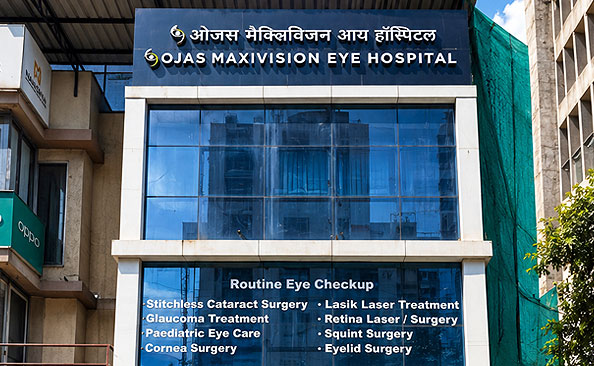
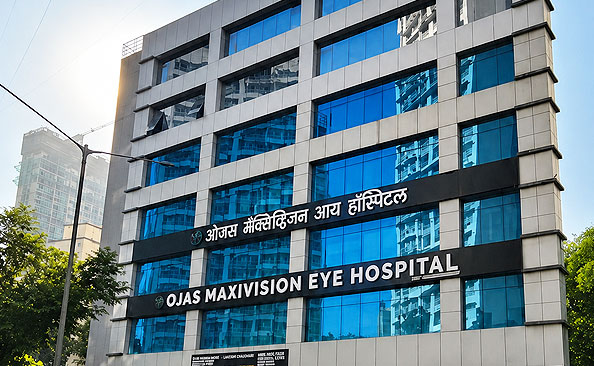
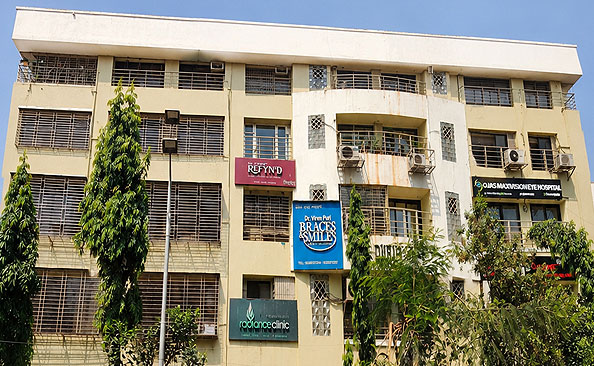
What makes an eye hospital best for eye treatments depends on the quality of treatment, expertise of doctors as well as the care and support provided before and after eye treatment. To identify the best eye hospital in Mumbai for eye treatments, you can first start by identifying the top 5 most reputed hospitals in Mumbai and learn more about the range of eye treatments and services offered, technology used for different eye procedures as well as the qualifications, experience and success rate of surgeries performed by the eye surgeons. While most of the eye hospitals feature all important information related to their range of treatments and technology used, repute, credibility and success rate of the surgeries performed and team of eye specialists on their website, you must try knowing about the quality of treatments, success rate, patients satisfaction, quality of care and support services, number of surgeries performed, and read patient reviews.
Ojas Eye Hospital has gained the trust of its patients for quality of treatments and expertise of the eye specialists. Popularly reckoned as the best eye hospital in Mumbai with trust of many high-profile personalities, hospital’s eye specialists especially Dr Niteen Dedhia, are considered as the best eye specialists in Mumbai.
Yes, we provide hassle-free cashless eye treatments in Mumbai to all CGHS beneficiaries and their dependant family members, policy holders of partner health insurance providers, as well as to the employees of RBI, NABARD and BSNL.
We at Ojas Maxivision Eye Hospitals offer a full spectrum of eye treatments and services. Some of the primary eye treatments, services and solutions we offer are Cataract Surgery, Refractive Surgery or LASIK Treatment, Cornea or Keratoconus Treatment, Glaucoma Treatment, Retina Treatment, Dry Eye Treatment, Vision Therapy, Paediatric Ophthalmology and Squint Treatment, Ocuplasty Treatment, and eye check-up, smart vision glasses or contact lenses.
Finding an eye hospital nearby is easy and can be done through a simple quick search on Google Search or Google Maps with keywords “eye hospital near me” and permitted location access. To identify the best eye hospital close to your location you can refer to the official website of a particular hospital or check reviews on Google Maps to know about the quality of eye treatment, qualification and expertise of doctors, and repute of the hospital.
However, if you are based in Mumbai, you can visit Ojas Maxivision Eye Hospital in Kandivali, Bandra or Juhu depending upon your location, which is considered as the best eye hospital in Mumbai for its excellence and high success rate in effective eye treatments, expertise of doctors, and pre and post treatment support.
Ojas Maxivision Eye Hospitals has partnered with all major health insurance providers for easy claims settlements and timely eye treatments. The health insurance policies accepted at Ojas Maxivision Eye Hospitals includes Aditya BirlaHealth Insurance, Reliance Health Insurance, SOMPO, navi health insurance, SBI general health insurance, care health insurance, HDFC ERGO health insurance, and BAJAJ Allianz Health Insurance.
Yes, you can visit Ojas Maxivision Eye Hospitals without appointments. However, to avoid waiting for consultation, eye check-up or eye treatments, it is advised to book an appointment in advance so we can perform detailed evaluation of your eyes and provide the best possible treatment for your eye condition on the same day without any wait times.
You can schedule an appointment at Ojas Maxivision Eye Hospital through the “Online Appointment Booking Form” on our official website, or by calling us directly on our helpline.
Ojas Maxivision Eye Hospitals has its branches in some of the most popular and prime locations. With our state-of-the-art eye hospital in Kandivali, Bandra and Juhu, we provide access to quality eye treatment near Borivali, Malad, Goregaon, Khar and Santacruz, Vile Parle, Santacruz, Andheri West, amongst other.
Regular eye checkup helps detect vision problems and serious eye diseases at an early stage. For children, the eye checkups should ideally be done during vacation before starting school and then every 1–2 years. Adults between 18 and 40 years of age should get their eyes tested every 2 years if they have no major vision problems. However, older people above 40 years of age should get their eyes checked every year because of the risk of cataract, glaucoma, diabetic retinopathy, and age-related macular degeneration. Patients with diabetes, high blood pressure, family history of glaucoma, or existing eye conditions may require more frequent eye check-ups as advised by the ophthalmologist.
The cost of cataract surgery depends on the preferred hospital for treatment, surgeon’s expertise, treatment procedure and type of intraocular lens (IOL). Standard monofocal lens surgery is generally more affordable, while premium multifocal or toric lenses increase the overall cost of cataract surgery.
We at Ojas Maxivision Eye Hospital provide advanced cataract surgery in Mumbai at fair and reasonable charges. The cost may vary depending on whether phacoemulsification or advanced laser-assisted technique is used.
Yes, cataract surgery is covered under many health insurance policies in India as well as under Ayushman Bharat Pradhan Mantri Jan Arogya Yojana (PM-JAY) for eligible beneficiaries. Coverage generally includes hospitalization, surgeon fees, operation theatre charges, and basic intraocular lenses. However, premium lenses, advanced laser procedures, and upgraded room facilities may not always be fully covered and could involve additional out-of-pocket expenses. Patients should verify the terms of their policy or scheme before the surgery.
Phacoemulsification is a modern cataract surgery technology in which ultrasound energy is used to break the cloudy lens into tiny fragments that are removed through a very small incision. The surgeon then implants an artificial intraocular lens. This method usually ensures faster recovery, minimal stitches, less discomfort, and quicker visual improvement.
Traditional cataract surgery, also known as extracapsular cataract extraction (ECCE), requires a larger incision to remove the cloudy lens in one piece. Recovery time is generally longer, and stitches may be required. Phacoemulsification is now more commonly preferred in India because of its safety, precision, and faster healing outcomes.
We at Ojas Maxivision Eye Hospitals treat cataract using Phacoemulsification under topical anaesthesia (putting eye drops) for stitchless and patchless procedure, and faster healing.
After cataract surgery most patients can start daily activities within 2-3 day, however complete recovery may take around 4-6 weeks. Some of things doctor advice patients to avoid are heavy lifting, bending excessively, swimming, dust exposure and rubbing the eyes. Most people experience improved vision within a few days of cataract surgery although best results may take a few weeks. Using prescribed eye drops and follow-up visits is important to ensure proper healing and recovery.
LASIK eye surgery in India varies for different hospitals. The price depends on the technology used, the surgeon’s expertise, cost of hospital facilities, and treatment approach. Standard LASIK is comparatively affordable, while bladeless LASIK, Contoura Vision, and SMILE surgery are more expensive due to advanced technology and techniques. Eye hospitals in major metro cities may charge higher fees.
At Ojas Maxivision Eye Hospital, we provide different types of LASIK surgeries at most fair and reasonable cost. LASIK procedures offered by us are Custom or Conventional LASIK, Opti LASIK, EPI-LASIK, and Presbyopic LASIK.
Yes, LASIK surgery is considered a safe and effective procedure in India due to technology advancement and when performed by an expert ophthalmologist. Lasik procedure has become one of the most popular procedures for freedom from glasses or contact lenses. However, it is not suitable for everyone and requires a detailed eye evaluation for checking corneal thickness, eye power stability, dry eye condition and the overall eye health before surgery.
LASIK and SMILE both are laser vision correction procedures, but differ in technique. While LASIK involves creating a thin flap on the cornea before reshaping the underlying tissue with a laser, and effectively treats myopia, hyperopia, and astigmatism with quicker recovery, SMILE (Small Incision Lenticule Extraction) is a newer minimally invasive procedure in which a small piece of corneal tissue is removed through a tiny incision without creating a large flap. SMILE may offer better corneal stability and reduced dry eye symptoms in some patients. It is mainly used for treating myopia and certain cases of astigmatism. The best procedure depends on the patient’s eye condition and the ophthalmologist’s evaluation.
LASIK surgery is usually not covered under health insurance plans in India because it is considered a preference-based cosmetic procedure. However, some insurance policies may provide partial coverage if the eye power is extremely high or if glasses/contact lenses cannot be used due to medical reasons. While certain health insurance plans may include LASIK eye surgery, patients should carefully review policy documents and be sure about eye treatments covered.
The best treatment for glaucoma depends on its type and severity. Lowering intraocular pressure and preventing permanent optic nerve damage is of prime important for an ophthalmologist. While using eye drops is usually the first line of treatment that helps reduce fluid pressure inside the eye, advanced surgical procedures may be necessary depending upon severity of glaucoma.
Ojas Maxivision Eye Hopsitals provides advanced treatment of Glaucoma in Mumbai through eye drops, oral medications and lasers treatments like Laser iridotmy, laser trabeculoplasty, amongst other options.
Diabetic retinopathy cannot always be completely cured, but it can be effectively managed and controlled if detected early. The condition occurs when high blood sugar damages the blood vessels in the retina.
Some of the treatments to prevent further vision loss and preserve eyesight includes laser photocoagulation therapy, anti-VEGF injections, steroid injections, and vitrectomy surgery in advanced cases. Strict blood sugar control, healthy blood pressure management, and regular eye evaluations is necessary for slowing disease progression.
Treatment for age-related macular degeneration (AMD) depends on whether it is the dry or wet form. Dry AMD can be effectively managed through lifestyle changes, nutritional supplements, smoking cessation, and regular monitoring. Wet AMD usually requires anti-VEGF eye injections that help stop abnormal blood vessel growth and reduce retinal swelling.
The cost of treatment in India varies significantly for different hospitals depending upon factors like need for multiple injections over several months, and diagnostic tests such as OCT scans and angiography.
Sudden blurred vision in one eye can be caused due to a serious eye or neurological condition. Some of the common causes for sudden blurred vision are retinal detachment, retinal vein blockage, eye infection, glaucoma attack, optic nerve problems, migraine, diabetic eye disease, or even stroke. In some cases, temporary blurring may occur due to dry eyes or intense eye strain, however it should never be ignored. It is important to consult an ophthalmologist for immediate attention if blurred vision is accompanied by pain in eyes and when flashes of light, floaters, headache, redness, dizziness or facial weakness is experienced, as early diagnosis and treatment can help prevent permanent damage and protect eyesight.